What Practical Effects Are
Practical effects are the ones that really happen in front of the camera or the audience. Nothing is added later on a computer. When you see fire on a stage, sparks falling behind a singer, or confetti filling a stadium, a special effects (SFX) crew made it happen live.
Digital effects can do almost anything today, so why do we still use real ones? Because real effects behave in ways that are hard to fake. Fire throws real light on faces. Sparks bounce and scatter. Confetti catches the air and drifts differently every time. Audiences can tell, and so can cameras.
This guide covers three effects that technicians like me work with all the time: flame, sparks, and confetti. For each one, I'll explain what it is, how it's made to happen, and what we think about when we use it.
Flame
The first rule of fire effects is simple: if we can't turn it off instantly, we don't light it. That's why almost all flame effects run on gas through valves, not on open fuel.
The most common tools are:
- Flame bars. Lengths of pipe with small burner holes, fed with propane. Hidden behind furniture or scenery, a few of them can make a whole room look like it's burning.
Flame projectors. The tall columns of fire you see at concerts and festivals. They fire in short bursts from a control desk, with several safety locks built in.
Because the fire is on a valve, the technician can make it bigger, smaller, or stop it completely in a second. That control also means the effect looks the same every time, which matters on film when a scene is shot again and again.
Gas flame burns mostly yellow and can look a bit too even on camera. Technicians break it up by placing burners at different heights or adding moving air, so it reads as a natural, wild fire.

Sparks
Sparks show impact or energy. A bullet hitting metal, a damaged control panel, a grinder cutting steel, or a fountain of gold behind a performer: sparks tell the audience something just happened.
There are a few main ways to make them:
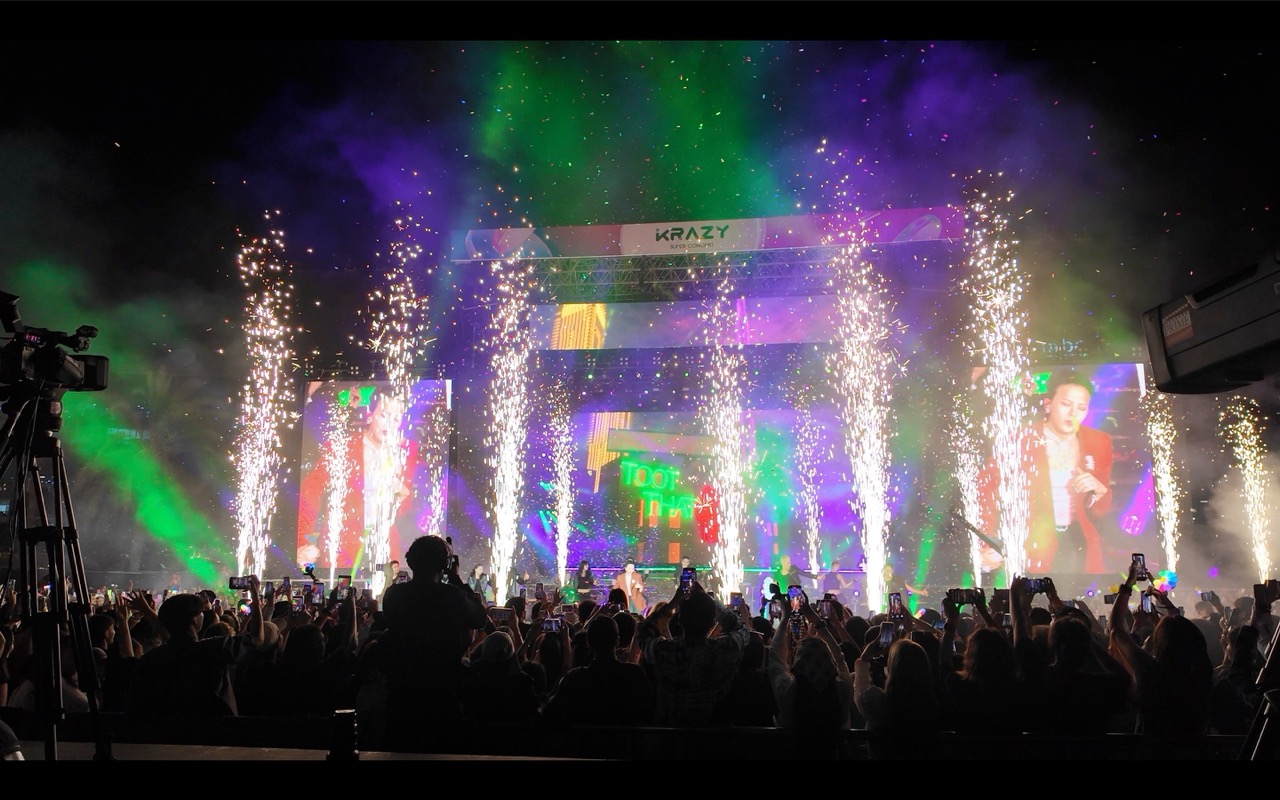
- Cold spark machines. The most common choice for stages, TV studios, and weddings. They heat tiny metal granules and shoot them up as a glittering fountain. The name is a little misleading, since the particles are hot when they leave the machine, but they cool very quickly. That makes them much better suited to indoor venues than traditional fireworks.
- Mechanical sparks. Real grinding or scraping of metal, often used for close-up film shots because it's simple and repeatable.
- Pyrotechnic sparks. Fountains, showers, and bullet-hit effects made with licensed pyrotechnic products. Only certified pyrotechnicians are allowed to handle these.
Sparks look best against a dark background with light behind them. On film, shooting at a higher frame rate slows the sparks down and turns each one into a long, graceful arc. Technicians also plan where the sparks will land, because the floor and anything nearby need to be safe to catch them.
Confetti
Confetti looks like the easiest effect of the three, but it takes real planning to get right. The material, the launcher, and the air in the room all change how it falls.
Launchers
- Compressed air or CO2 cannons shoot a big burst high into the air on cue.
- Confetti blowers use fans to push out a steady stream that can last for many seconds.
- Hand-held shooters are small and simple, good for close-up moments.
- Drops from above, where confetti is loaded into bags or nets hung over the crowd and released.
The tricks of the trade
Air is the biggest factor. Air conditioning, wind, or a big crowd can carry confetti far from where you aimed it. Technicians test fire in the empty venue first. They also plan the cleanup, because confetti gets everywhere and some venues charge extra to remove it.

Using Them Together
Big shows often layer all three effects into one moment. A typical concert finale might build like this:
- Flame bursts hit on the big beats as the song builds.
- Sparks rise across the front of the stage for the last chorus.
- On the final note, confetti fills the air over the crowd.
The order matters. Flame and sparks usually come first, and confetti comes last, once the hot effects have stopped. Keeping them apart in time and space stops paper from drifting into a hot zone.
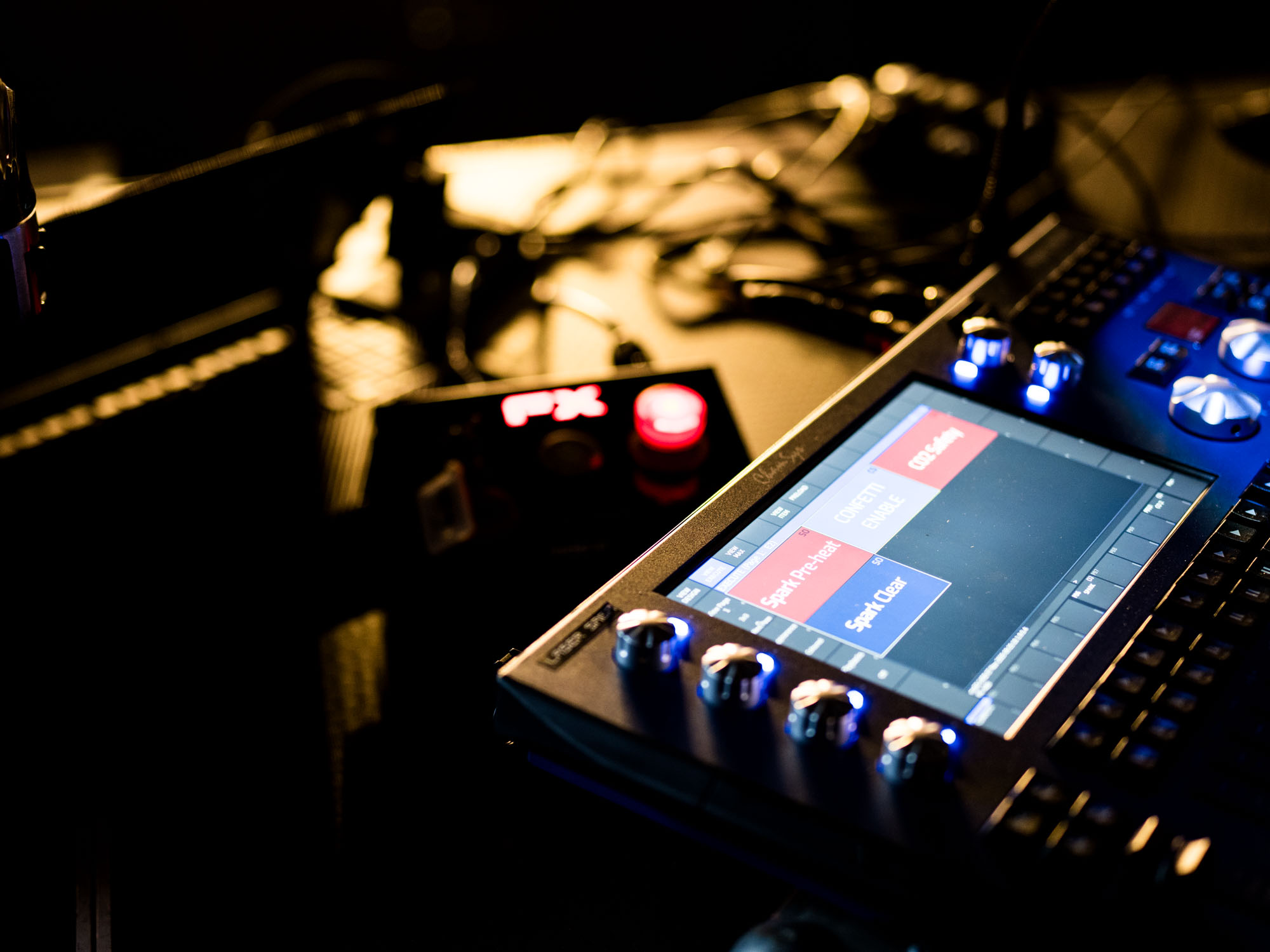
Every cue is planned and rehearsed with the lighting, sound, and stage teams. On the night, each effect has its own operator, and nothing fires until the person in charge calls it.
Safety and Rules
Fire and pyrotechnics are regulated in almost every country. In most places, the people who run them need a license or certification. Local fire authorities often have to approve the effects, and a fire safety officer may stay on site the whole time.
The habits professionals follow are much the same everywhere:
- Plan first. Every effect gets a written risk assessment: what it does, what could go wrong, and how to prevent it.
- Keep clear zones. Nobody stands where sparks fall or near a flame effect. The operator must always be able to see it.
- Be ready. The right fire extinguishers and a trained fire watch are in place before anything is lit.
- Protect the set. Fabrics and scenery near the effects are treated to resist fire.
- Rehearse. First without effects, then effects without performers, then everything together.
- One voice calls it. Clear commands, and a stop word anyone can shout.
Confetti is the gentlest of the three, but it still needs care. Cannons can hurt people if fired too close, and loose paper on the floor can make people slip.
If you want to work in this field, the best route is through a qualified effects company or a recognized training course. Expect to spend a long time learning from experienced technicians before you run an effect yourself.

Final Thoughts
Flame, sparks, and confetti are some of the oldest tricks in live entertainment, and they still get the biggest reactions. What makes them work isn't the fire, the metal, or the paper. It's the planning, the timing, and the teamwork behind each cue.
The next time you see a wall of fire at a concert or confetti raining down after a big win, you'll know a crew spent hours making sure it happened safely, and exactly on time.