1910s–1940s: Making music louder
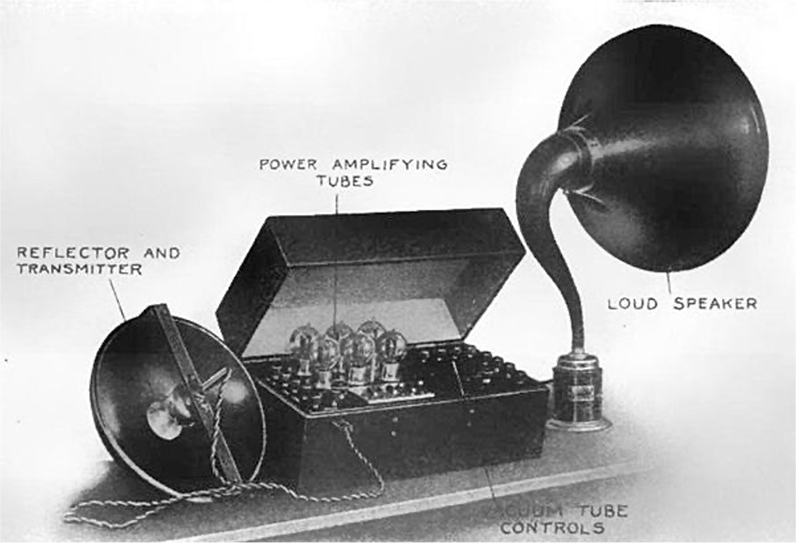
The first electric sound reinforcement systems appeared in the early 20th century. In 1915, a Magnavox system was used at a public Christmas concert in San Francisco, and around 100,000 people heard it. For the time, that was a staggering reach for a single performance.
Over the following decades, the core tools kept getting better. Microphones became more sensitive, tube amplifiers more powerful, and loudspeakers more efficient. Step by step, PA systems became an essential part of every large public event.
Why it matters: electric amplification broke the physical limit of the human voice and acoustic instruments. For the first time, artists could reach audiences far bigger than any room could hold.
1960s–1970s: Sound for thousands
The rise of rock music and massive outdoor festivals changed the scale of live events overnight. Crowds grew into the tens of thousands, and the old systems simply couldn't keep up. The industry needed more powerful sound systems that delivered clear, quality audio to every corner of the venue, not just the front rows.
At the same time, a new problem appeared on stage. With loud backlines and huge PA stacks, musicians struggled to hear themselves and each other. The answer was stage monitoring: a separate mix built just for the performers. Dedicated monitor consoles appeared, and so did separate teams of sound engineers, one focused on the audience and one on the artists.
Why it matters: concert sound stopped being a single setup and became a system with two jobs. That split between front-of-house and monitors is still the backbone of live audio today.

1970s–1980s: Lighting gets its own script
In the 1970s, programmable lighting consoles changed how shows were lit. Designers could now build lighting scenes in advance, save them and play them back during the performance. Lighting moved away from improvisation and toward prepared cue lists run by skilled operators.
The next leap was automating the fixtures themselves. In 1981, Vari-Lite technology debuted on Genesis concerts. These fixtures could change color and beam direction remotely, mid-show, without anyone climbing the rig. Moving lights were born, and stage lighting would never look the same again.
Why it matters: light became a true scenic design tool. It could reshape the space, guide the audience's eye and drive the emotional arc of a performance.

1980s–2000s: The stage breaks out of physical space
In the 1980s, large video projections and live camera feeds became a regular part of concert tours. Screens meant that fans in the farthest seats could finally see the artist's face, their expressions and every detail of the performance. The stage was no longer limited to what the eye could see from a distance.
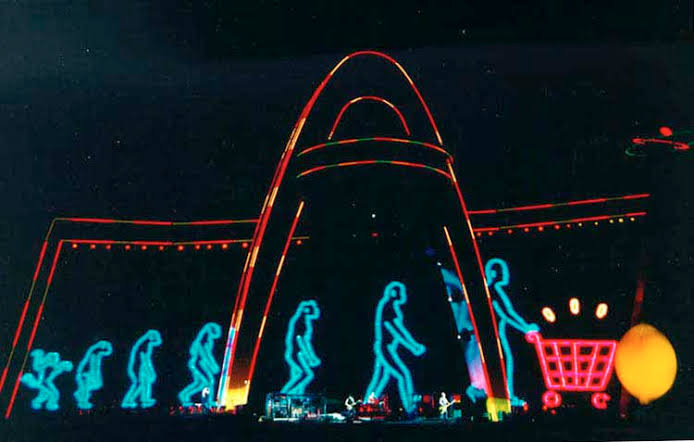
In the 1990s, video went further and became part of the set design itself. Tours introduced huge video walls, content made specifically for the show and complex visual compositions. A landmark example is U2's PopMart tour in 1997, which carried an LED screen 52 meters wide and 17 meters high.
Why it matters: video turned into a full stage design tool. It no longer just showed the show; it shaped the visual identity of the entire production.
1990s–2010s: Technology learns to work together
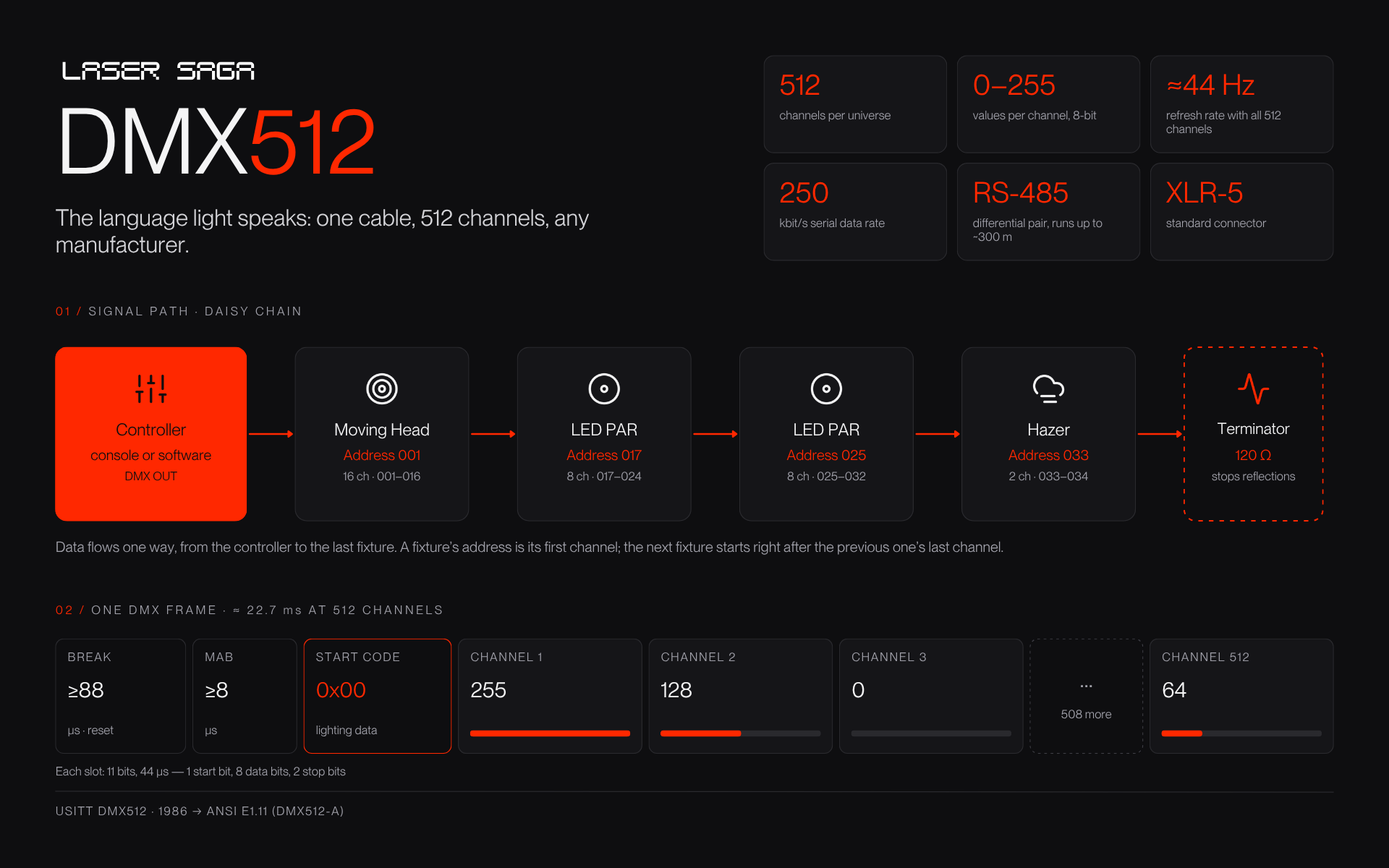
By now, sound, light and video were all powerful on their own. The next challenge was getting them to talk to each other. During this period, the digital protocols MIDI and DMX512 became widely used to control concert equipment, giving different devices a shared language.
Timecode took this one step further. It let teams sync lighting, video, sound effects and stage automation to a single master clock. Systems could run from a pre-programmed script and fire the right effect at exactly the right moment, every night of the tour.
Why it matters: the focus shifted from controlling individual elements to coordinating the whole show as one connected system.
Today: The concert as technical infrastructure
A modern large-scale show can combine dozens of technical disciplines: sound, lighting and video, plus stage automation, robotic cameras, lasers and SFX. A show today runs less like a gig and more like a moving piece of infrastructure.
Behind every effect there's equipment, programming, technical calculations and a team of specialists. Every process has to be planned, tested and synced in advance. And because live means there are no second takes, teams also build backup solutions for the moment something fails.
To run productions this complex, crews rely on Show Control systems. These platforms coordinate all the different elements of the show so they act as one.
Why it matters: a few minutes on stage can be the result of hundreds of people's work and a deeply layered system of technical solutions.

The people behind the show
In about a hundred years, concerts went from a single amplifier in a city square to tech ecosystems that tour the world. Each era added a new layer: louder sound, smarter light, bigger screens and, finally, systems that make it all move together.
One thing hasn't changed. Behind every breakthrough there's a team of professionals who make it work, night after night. As shows keep getting more ambitious, the industry needs more people who understand both the craft and the technology.